Tuesday, September 22, 2026

The Progressive Era


A protest from the progressive era with people of all ages protesting the war.
When I think about freedom of speech, I usually think about whether or not someone is allowed to say something. But after learning about antiwar speech during World War I, I started thinking about a different question:

What if you are allowed to speak, but hardly anyone hears you?

During the Progressive Era, people were literally punished and even jailed for speaking out against American involvement in World War I. Today, we obviously have much stronger protections for political dissent. People can criticize American wars, military actions, and foreign policy without automatically being thrown in jail for their opinions.

But that does not necessarily mean those opinions receive the same amount of attention.

So, Where Are the Antiwar Voices?

What surprised me about Antiwar.com was how openly it presents its perspective. The site describes itself as opposing interventionist foreign policy and brings together antiwar perspectives from across the political spectrum. That challenged my assumption that being “antiwar” automatically belongs to one side.

It also made me wonder why perspectives like these seem less common in the mainstream news I normally encounter.

I do not necessarily think there is some giant conspiracy where mainstream news organizations meet and decide not to let antiwar people speak. I think the answer is probably more complicated than that.

When major news organizations cover wars, they often turn to presidents, government officials, military leaders, and other people with authority. Those sources obviously have important information, but relying heavily on them can also shape the story we receive.

We have actually seen this happen before. Research examining television news leading up to the Iraq War found that Bush administration officials were the most frequently quoted sources, while American antiwar groups received very little attention.

That matters because who gets interviewed can be just as important as what gets said.

The Marketplace of Ideas

This is where the Marketplace of Ideas really clicked for me.

The idea is that different viewpoints should be able to compete openly, allowing people to hear different arguments and decide what they believe for themselves.

But a marketplace only works if we can actually find the different options.

The First Amendment can protect someone's right to stand up and criticize a war. It cannot guarantee that CNN, Fox News, NBC, TikTok, or any other major platform will put that person in front of millions of people.

That creates a strange modern problem. Someone's speech might be completely legal while still being practically invisible to most Americans.


Freedom to Speak vs. Opportunity to Be Heard

I think that distinction is one of my biggest takeaways from this assignment.

During World War I, the major First Amendment issue was whether the government could punish people for their antiwar speech. Today, we still have debates about government restrictions on speech, but we also have to think about something the First Amendment cannot completely solve: whose voices actually reach us?

That does not mean alternative sources are automatically better or more trustworthy than mainstream ones. Every source has its own perspective, priorities, and biases. Antiwar.com itself is very open about having a particular viewpoint on foreign policy.

Maybe that is actually part of the lesson.

We should not expect one news source, one TikTok feed, or one political perspective to give us everything we need to understand an issue.

The First Amendment protects the ability to dissent. The Marketplace of Ideas gives us the theory for why dissent matters.

But neither one can force us to listen.

AI DISCLAIMER: AI was not used in the research and information for this blog post. All information came from notes that I took while watching the assignments videos and visiting the two sites provided. I then prompted Microsoft Copilot to help me shape my notes into a blog post. I then added links to online sources that the reader could pursure for more information. Finally I added appropriate images and captions to help break up the type and give the post a more professional look.

Thursday, September 10, 2026

Privacy Online and Off

Locking down your devices is vital in protecting your privacy.

  Ted Talk Reflection: Modern Privacy 

    Technology has created a simple and easy way for us to communicate with one another but has also created concerns about privacy and government control. After watching the videos and listening to lecture, I was surprised on how much information can be collected even for ordinary people. 

    One issue discussed in the video that stood out to me was the use of mass surveillance technologies by local police departments. The video explained how tools such as license plate readers, cell tower dumps, and Stingray devices can collect information about people's locations and activities. What surprised me most was that these technologies often gather information on large groups of people, not just criminals or suspects. Even if someone has done nothing wrong, their data can still be collected and stored in government databases.

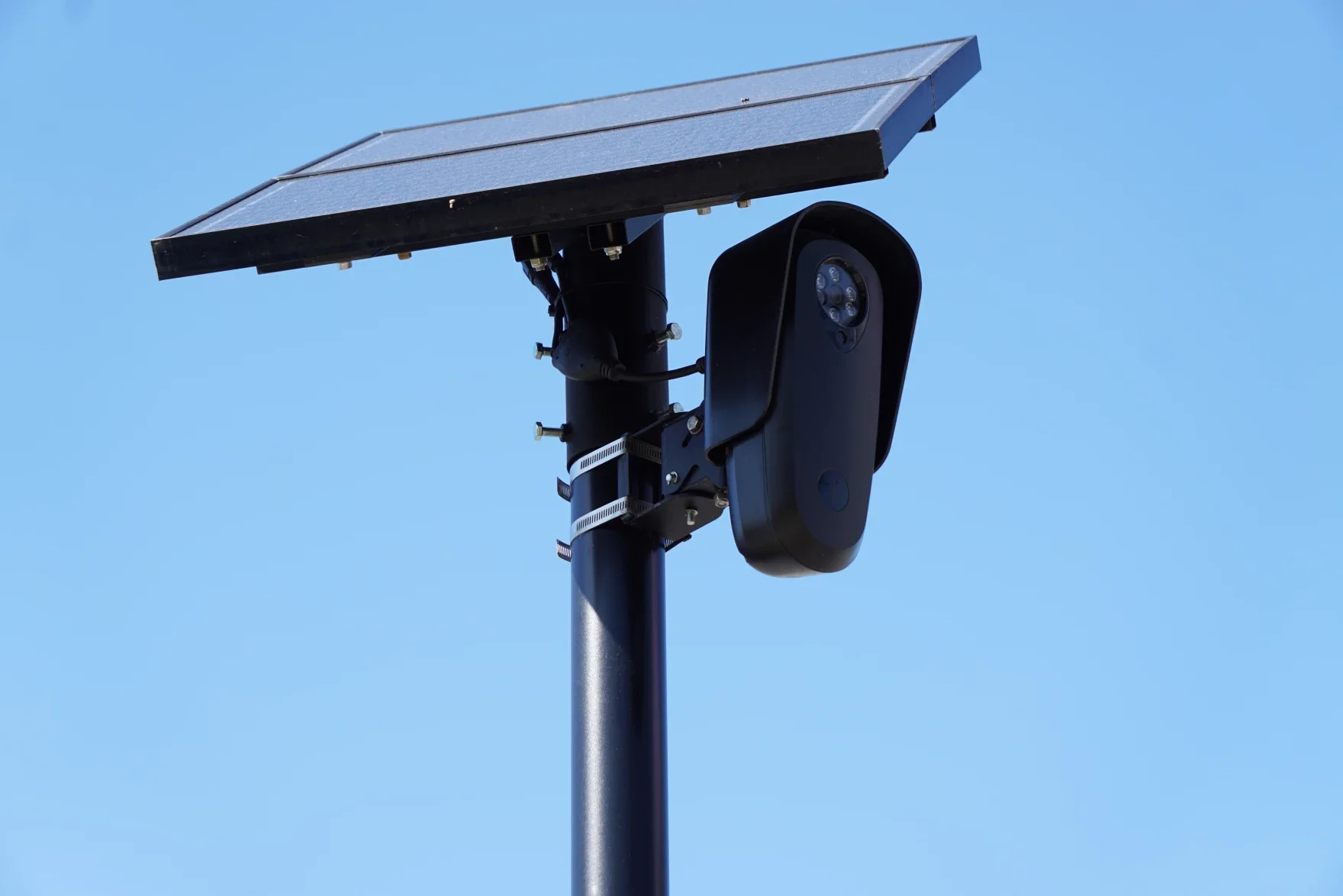
An example of a flock camera.

    This issue affects me because I carry my phone everywhere and drive regularly. My friends and family do the same. Knowing that my location could potentially be tracked through my phone or vehicle makes me question how much privacy people actually have today. While these technologies may help solve crimes, they also create concerns about civil liberties..

    I believe the government should establish stricter rules about how surveillance technologies are used. Law enforcement should need strong justification before collecting or accessing personal information. There should also be transparency about what data is being stored, who has access to it, and how long it is kept. Surveillance tools can be useful for public safety, but there should ways to prevent them from being used in ways that violate our rights.

    To protect ourselves, we need to be more aware of the information we share and the technology we use. While it is impossible to completely avoid data collection, people can take steps such as reviewing privacy settings, limiting location sharing, and being cautious about what they post online. 

    Another issue discussed in the video was how companies such as Facebook collect and monetize user data. Through data mining and behavioral marketing, companies track users' online activity. 

    The video also introduced the idea of adhesion contracts, agreements in which one party holds nearly all the power. Most people accept terms of service without reading them, often giving companies broad permission to collect and use their data. This reflects a larger problem in today's digital world: convenience often comes at the cost of privacy.

    Overall, the video made me realize that privacy is becoming increasingly difficult to maintain. Both government surveillance and corporate data collection have the potential to reveal a great deal about our lives. While technology offers many benefits, it is important that individuals, companies, and governments work together to ensure that privacy rights are protected in the digital age.

AI DISCLAIMER: AI was not used in the research and information for this blog post. All information came from notes that I took while watching two Ted Talk Videos." I then prompted Microsoft Copilot to help me shape my notes into a blog post. I then added links to online sources that the reader could pursure for more information. Finally I added appropriate images and captions to help break up the type and give the post a more professional look.

EOTO - Social Media

The popular app icon for the app Instagram on a smart phone.


How Social Media Changed Communication

Think about how many times you have already checked social media today. Maybe you opened Snapchat when you woke up, scrolled through TikTok while getting ready, or checked Instagram without even realizing you were doing it. Social media is so normal in our lives that we rarely stop to think about how new it actually is.

What surprised me most when looking into the history of social media was that there isn't really one person who "invented" it. Instead, social media developed over time as different platforms found new ways to connect people through the internet.

So Where Did It Start?

One of the earliest recognizable social networking sites was SixDegrees, which launched in 1997. The platform allowed people to create profiles, connect with friends, and see their network of connections.

That sounds extremely simple compared to what we have today, but the idea was pretty groundbreaking. The internet was no longer only somewhere you went to find information. It could also become a place where you interacted with other people.

From there, social media took off. Friendster and MySpace expanded online profiles and friendships. Facebook launched in 2004, YouTube followed in 2005, and Twitter arrived in 2006. Eventually, Instagram, Snapchat, and TikTok introduced even more visual and immediate ways of communicating.

And people adopted social media fast. In 2005 only 7% of Americans used social media, by 2015 it was about 65%.

To me, this is where social media really changed communication.

Before social media, the average person couldn't easily send a message to thousands of people. Mass communication was largely controlled by newspapers, television stations, radio, and other established organizations.

Social media changed that.

Now, anyone with a phone can potentially become a publisher. We can share photographs, videos, opinions, news, and personal experiences instantly. Businesses can communicate directly with consumers, creators can build careers entirely online, and people can find communities across the world. Social media didn't just make communication faster. It changed who gets to participate in mass communication.

Social Media greatly effects mental health.

Of course, giving millions of people the ability to instantly share information has consequences.

One of the biggest is misinformation. MIT researchers studying information shared on Twitter found that false information spread farther, faster, deeper, and more broadly than truthful information in their dataset.

There are also concerns about mental health. The U.S. Surgeon General has warned that we still cannot conclude social media is sufficiently safe for children and adolescents and has called for greater attention to both its potential benefits and harms.

Then there are questions about privacy, data collection, cyberbullying, unrealistic expectations, and how much of our personal lives we should actually put online.

Social media began with a pretty simple goal: connecting people through the internet.

Less than 30 years later, that idea has become something much bigger. Social media affects how we communicate, shop, learn, get news, advocate for causes, and understand other people.

Maybe the most important part of its invention isn't a specific app at all. It's the fact that social media changed the relationship between people and mass communication.

We aren't just the audience anymore.

We're also the ones creating it.

AI DISCLAIMER: AI was used in the design and creation of this post. It helped me gather sources and create a blog like structure to effectively communicate the information.

Thursday, September 3, 2026

Eight Values of Free Expression


All eight values are vital in interpreting freedom of speech.

    All eight values are important when it comes to understanding freedom of speech, but some stand out to me more than others.

    Freedom of speech is often described in its simplest form as the ability to speak without government interference. After learning about the Eight Values of Free Expression, though, I realized that freedom of speech goes much further than simply having the right to talk. I see it as something that shapes our identities, allows us to challenge people in power, and teaches us how to live in a society where not everyone agrees. 

    The three values that stand out to me the most today are Self Fulfillment, Protect Dissent, and Promote Tolerance, especially because so much of the way my generation communicates happens online.

C. Edwin Baker outlines Self-Fulfillment. 
    Individual Self Fulfillment, based on the ideas of C. Edwin Baker, argues that free speech allows people to express themselves and develop their own identities.
    I think this is especially relevant to my generation because so much of our self expression happens through social media. We use it to share our interests, beliefs, experiences, humor, creativity, and opinions. I also think one of the most valuable parts of social media is that it allows people to find communities where they feel understood, especially when they might feel isolated in their everyday lives.

    In the past, people usually needed a large platform or some kind of influence to share their ideas with a wide audience. Now, almost anyone with a phone can put their thoughts out into the world. I think that accessibility can be extremely powerful because ordinary people have the opportunity to shape conversations, challenge norms, and find a sense of belonging. 

    At the same time, putting so much of ourselves online means that our identities and opinions are constantly exposed to other people's reactions, and I think that creates an entirely different challenge.

    Even with all of the opportunities social media gives us to express ourselves, I also think it can make people afraid to speak. The pressure to fit in or say the "right" thing can cause people to hold back their actual opinions. This connects directly to Protect Dissent, which Steve Shiffrin describes as the First Amendment's protection of minority and unpopular viewpoints. To me, this value is important because our system is not supposed to operate through "mob rule." 

    It is easy for me to say I support free speech when I agree with what someone is saying. I think the real test is whether I still support their right to say it when their opinion makes me uncomfortable.

Free expression can have good and bad effects.
Social media has almost created a new kind of "mob" because thousands of people can react to one person's post within minutes without ever physically gathering together. Sometimes that response is completely fair criticism, which is also protected speech. 
    Other times, though, it seems like the goal becomes less about challenging someone's argument and more about making that person afraid to ever speak again.

    This is where I think Promote Tolerance, based on Lee Bollinger's theory, becomes especially important. I understand this value as the idea that allowing speech, even speech that I personally find offensive, can help teach society how to tolerate disagreement. 

    When harmful or offensive ideas are allowed to exist openly, I also have the opportunity to challenge those ideas, explain why I disagree, and reinforce what I believe should or should not be socially acceptable.

    To me, tolerance does not mean agreement, and disagreement does not automatically mean censorship. Free expression means someone can voice an idea that I completely disagree with, but it also gives me the freedom to respond with my own ideas.

    I think social media is both one of the greatest tools and one of the greatest challenges we have when it comes to free expression. It gives more people than ever the ability to find and use their voice, but it also exposes those voices to immediate judgment from massive audiences.

    Learning about the Eight Values of Free Expression helped me understand that the First Amendment is not just about protecting speech that is comfortable, popular, or easy to agree with. I now see it as creating a society where I can develop my own identity, challenge the majority, hear ideas I dislike, and respond to those ideas rather than simply trying to silence them.

    For me, that is one of the biggest challenges of free expression today. We have more opportunities to speak than ever before, but that does not necessarily mean we have become any better at listening.

Tuesday, September 1, 2026

Supreme Court Reflection


A gavel that is used in the court by a judge.

    When I first learned about the Supreme Court in AP Government, I understood the basics: it interprets the Constitution, checks the other branches, and decides whether laws are constitutional. But after diving deeper, I realized just how much history, intention, and nuance shape the Court’s power—and why it plays such a crucial role in maintaining balance in our government.
   
 One of the biggest revelations for me was understanding why the Court holds the authority it does. The founders were deeply worried about creating a government that could become as overpowering as Great Britain’s. So, they designed a system where each branch had equal power—or at least, that was the intention.

But history had other plans.

The Court didn’t always have the influence it has today. When John Marshall became Chief Justice, things changed dramatically. The landmark case Marbury v. Madison established judicial review, giving the Court the ability to decide whether government actions are constitutional. That single decision reshaped the balance of power.

I immediately connected this to the Alien and Sedition Acts—laws that made it a crime to criticize the government. Without judicial review, acts like that could have gone unchecked, threatening the First Amendment and opening the door to government overreach.


   Another surprising part was learning how selective the Court is. Out of thousands of petitions, they take only about 100 cases a year. Before watching the videos, I had never heard the term certiorari, but now it makes sense: choosing not to take a case isn’t the same as agreeing with the lower court. It’s simply the Court deciding which issues are important enough to address at the national level. I was also surprised with how selective the Supreme Court is about their cases. They only take around 100 a year even though they get thousands. Before watching the videos I did not hear of the word certiorari. It makes more sense looking at cases that they choose not to take and realizing they aren't just agreeing. 

    As someone who did debate in high school, I imagined Supreme Court arguments as intense, back‑and‑forth battles. But the reality is much more conversational. The justices ask questions, interrupt, push, and probe—not to “win,” but to understand.

And the voting process? It’s far from black and white. There are layers of interpretation, precedent, and constitutional philosophy behind every decision.

The biggest takeaway for me is that the Supreme Court’s power isn’t just written in the Constitution—it’s also rooted in the respect people give its decisions. The entire system was built to limit government power while protecting individual rights, and the Court sits at the center of that balance.

Honestly, it’s become my favorite branch of government. It’s the one that keeps everything in check.

Overall, these videos completely changed how I see the Supreme Court. Most people think of it as nine justices handing down answers, but there’s so much more happening behind the scenes. Every decision involves history, process, debate, and interpretation of a document written centuries ago.

That’s why the Court is both respected and controversial—and why its role in American democracy is so essential.

AI DISCLAIMER: AI was not used in the research and information for this blog post. All information came from notes that I took while watching a video titled "Supreme Court of the United States." I then prompted Microsoft Copilot to help me shape my notes into a blog post. I then added links to online sources that the reader could pursure for more information. Finally I added appropriate images and captions to help break up the type and give the post a more professional look.

Wednesday, August 26, 2026

Top Five New Sources

 News and where I find it is a vital part of my day in order to feel informed and knowledgable. I grew up priveledged and very shelters which motivates me to get news from unbias and multi leaning sources in order to take away my personal bias. 

#1 Ground News 

    My number one source of news is an app called Ground News. This app gives me current events and then provides me with the story with multiple headlines from different news sources and details of what way it leans. I like it best because I can access news sources from the app but also see the differences the same story has depending on the source. It is easy to use and is something I access on a day to day basis. 

#2 New York Times 

    My second source of news is the New York Times. I do the wordle almost every day and then I look at current events on the actual news of the app. Its normall something I look at in the morning and just briefly read over the current events. 

#3 Apple News 

    I also gravitate towards apple news because it is on my iphone. I will get notifications and click into them to read more. I don't go to it as my first choice but can easily get click baited by the notifications and continue reading other news lines. 

#4 CNN 

    I like using CNN because I have since middle school and I also think they do a good job at appealing to gen-z users. I am aware of the bias and definitely take in to account that the information I am getting is left leaning. 

#5 ABC 

    I will sometimes find myself watching ABC but now that I no longer watch as much television I do not find myself watching this as much. I do like to sometimes watch news over read news because I believe that helps me better interpret the tone so that is a case when I will choose ABC. 


The Progressive Era

  A protest from the progressive era with people of all ages protesting the war. When I think about freedom of speech, I usually think about...